
Introduction: Navigating Hidden Dangers
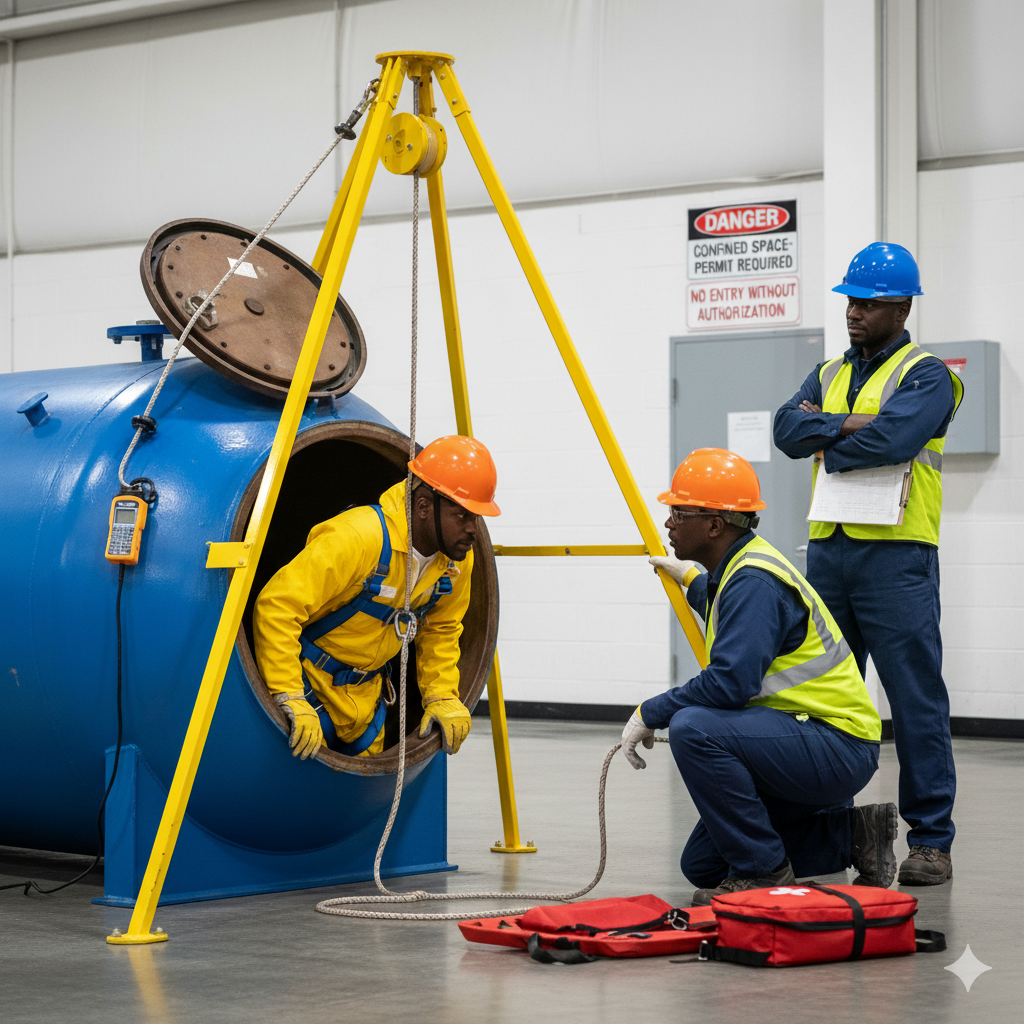
Working in confined spaces presents some of the most serious hazards in any industry, often with little room for error. Defined as enclosed areas with limited entry/exit points and not designed for continuous human occupancy (e.g., tanks, silos, sewers), these environments demand specialized training.
Pulsar Fire & Safety’s Confined Space Safety Training is designed to equip workers and supervisors with the critical knowledge and skills needed to safely enter, work within, and exit these high-risk areas. This training is mandatory for all personnel involved.
1. Who Needs Confined Space Safety Training?
Due to the inherent dangers, this training is crucial for several key roles:
- Confined Space Entrants: Those who physically enter the confined space.
- Confined Space Attendants: Individuals stationed outside to monitor entrants and provide assistance.
- Entry Supervisors: Those responsible for authorizing entry and overseeing operations.
- Rescue Personnel: Teams designated for emergency response in confined spaces.
2. Comprehensive Confined Space Training Modules
Our curriculum covers the essential aspects of confined space safety, ensuring a thorough understanding of risks and preventative measures:
- Hazard Recognition: Identifying the unique dangers present in confined spaces, such as oxygen deficiency, toxic gases, flammable atmospheres, engulfment hazards, and extreme temperatures.
- Entry Permits: Understanding the importance and components of a Permit-to-Work system specifically for confined spaces, detailing entry conditions, authorized personnel, and safety precautions.
- Atmospheric Testing and Gas Monitoring: Learning how to properly use equipment to monitor air quality for oxygen levels, flammable gases, and toxic substances before and during entry.
- Ventilation and Isolation: Techniques for ensuring adequate airflow and safely isolating the space from energy sources or incoming materials.
- Personal Protective Equipment (PPE): Selecting and correctly using appropriate PPE, including respirators, harnesses, and fall protection.
- Emergency Procedures and Rescue Planning: Developing and practicing confined space rescue plans, including non-entry rescue techniques and proper use of retrieval systems.
3. Benefits of Confined Space Safety Training
Implementing this specialized training provides critical advantages:
- Prevents Fatalities and Serious Injuries: Directly addresses the high-risk nature of confined spaces.
- Ensures Legal Compliance: Helps organizations meet stringent regulatory requirements for confined space entry.
- Increases Worker Confidence: Equips workers with the knowledge to perform tasks safely and respond effectively in emergencies.
- Reduces Financial Liabilities: Minimizes costs associated with accidents, fines, and business interruptions.
PULSAR FIRE & SAFETY: Your Trusted HSE Partner
PULSAR FIRE & SAFETY is your trusted HSE Partner, providing the mandatory training and expertise needed to manage the extreme risks associated with confined spaces.
Remember: Safety Begins with you.